
Healthy Cell Membranes
If you have a family, or are in a relationship, or even if you have ever attempted to cancel your cable television service, you understand the importance of a message being received clearly, the first time. Communication in and across the brain is no different. As described in chapter six, neurons are the brain cells that do all the sending and receiving of messages.
To review, the axon is the long part of the neuron that carries the electrical message from one end of the neuron to the other. Once the message reaches the end terminal, the release of chemical messengers called neurotransmitters is triggered. The neurotransmitters then dock with receptors on a neighboring neuron, and then an electrical signal is triggered within that neighboring neuron. That neighboring neuron then passes the electrical signal on to another, and the cycle continues.
The axon gives the neuron its length. Some neuronal axons can stretch up to multiple feet inside the body. For a message to successfully reach the end terminal, it must travel all the way down the axon. If the structure of the neuron is not optimal, messages can be lost or take too long to get to their destination.159
The axon also plays this super important role of protecting the integrity of the message while pushing it along from one end of the neuron to the other. But when problems arise, messages become lost. Lost messages equal fuzzy thinking, memory lapses, and poor focus. Optimal communication depends upon optimal structure of neurons across the brain. And, optimal structure depends upon optimal nutrition.
The Game of Telephone
Our brains contain billions of neurons. Moreover, there’s trillions of interconnections between all those billions of neurons. Remember from the last chapter how a fully activated brain circuit allows us to experience a memory, thought, feeling, sensation, or perception? For a neuronal circuit to be fully activated, communication between all the neurons in that circuit must happen quickly, and without mistakes. Otherwise, messages don’t make it through to their final destination. They become lost forever. With lost messages, communication within the brain suffers.
Miscommunication is a bad thing. Think of your conversation with the cable television sales representative. You find yourself a quiet space, rehearse a bit, take a deep breath, and dial them up to let them know you are ready to cancel your service. After waiting an excessively long time on hold, a representative picks up and asks you a series of questions about yourself that feel both invasive and unnecessary – especially in light of what you’re about to do.
Finally, it’s break up time. You state clearly that you want to cancel service. Instead of hearing your desire to cancel, the representative initiates the “customer retention” script. You try again. But the representative on the other end glosses over your deep yearning desire to cancel your service. They go on to tell you about the very special, time-limited promotional upgrade that just became available just this hour. A looming sense of defeat crawls up your spine. It’s now or never. Time to amplify your message. While showering your phone with spittle, you tell them where they can put their special deals because it’s over. After a number of failed attempts, the message finally gets through. The deed is done.
In terms of communication, it would be much better if he or she heard you the first time. In terms of how much you pay for cable, this is incredibly infuriating. You sent your message loud and clear, but it was not received. Your message was lost. Frustration, confusion, and perhaps anxiety ensue. We can become similarly unsettled if messages from one part of our brains take too long to get through or somehow get lost along the way to another part.
What Are You, Thick in the Head?
My grandfather, the “jiddo” to my sitto, loved to point out other people’s foolish mistakes. It was one of his favorite pastimes. As a kid, I’d overhear him talking with my dad and uncles. He’d often comment how other people were “out of their minds” and that so-and-so must be “thick in the head.” As a kid, fear of being on the wrong end of this deep burn led me to spend a good amount of time in front of the mirror, trying to figure out which way I could angle my head to make it look the thinnest. It was years later, after reading much scientific research, that I discovered being thick in the head was actually a good thing!
To reduce the chances of lost messages in the brain and the associated problems that come with lost messages, nature invented the myelin sheath. Myelin is the name of chunks of fat that surrounds the axon of most neurons. This fatty layer actually increases the speed and efficiency of the electrical messages traveling down the axon.159 This is why being thick in the head is a good thing.
Let’s continue with the cable TV theme to help explain the purpose, structure, and function of myelin. Picture in your mind the round, black coaxial cable we use for our cable boxes and televisions. If you look at the end of the cable, you’ll notice that in the center is a thin, copper wire. Despite making up a small part of the entire cable, that copper part in the center does all the work of sending messages. The remaining diameter of the coaxial cable is a bunch of fuzzy insulation with a rubber coating on the outside. The insulation does not participate in sending messages. It’s role is to protect messages from getting lost. Myelin keeps the signal on track and moving forward.
Covering up the thin copper wire with insulation and rubber coating helps ensure that the signal is not lost on the way from the utility poles outside your house to your television. On most neurons, the myelin sheath provides that same type of insulation. Myelin is like that fuzzy insulation and rubber coating. Our neurons are the copper wires doing the sending and receiving of messages.
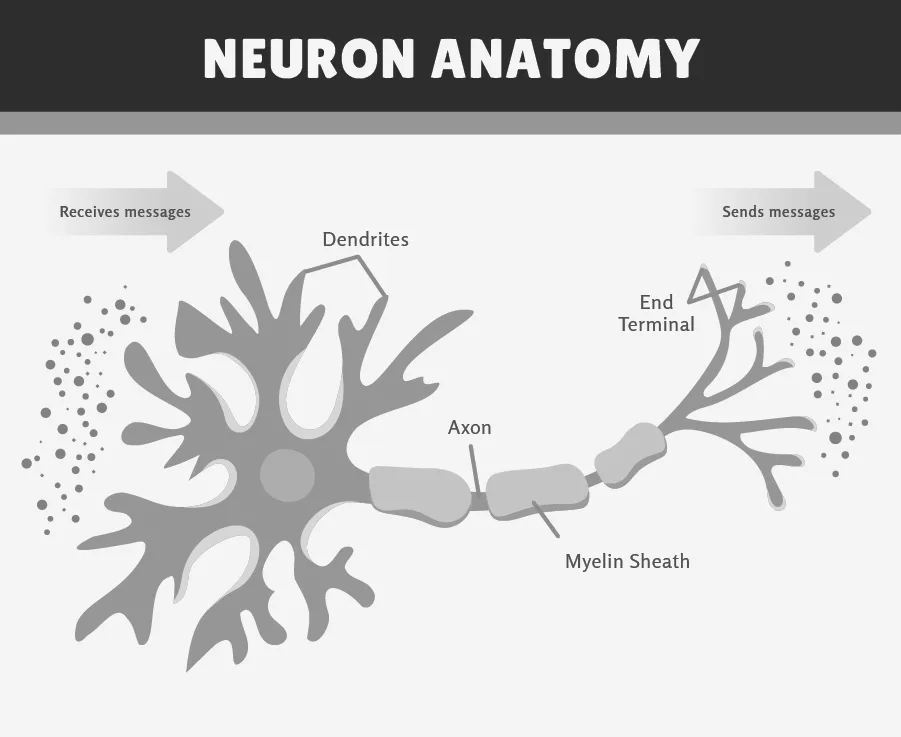
Beyond this supportive role, myelin is also really important for the speed of communication in the brain. The myelin sheath not only protects the integrity of messages by preventing them from getting lost along the way, it also boosts the speed of signals by a hundred-fold.159
As you may have guessed, there are specific nutrients that the brain requires to manufacture and install myelin along the axons. There’s actually a specific breed of brain cells, called oligodendrocytes, that perform this job.160Oligodendrocytes require a host of nutrients from TMWD to manufacture and install myelin. Myelin itself is made up of various fatty substances, one of which is (brace yourself) cholesterol.161 Yes, there indeed is something positive about cholesterol. It is not the devil’s spawn after all.
Look Ma, No Hands!
So far we’ve made the case for speed and integrity (keeping messages on track and not losing them) as two key factors for optimal communication in the brain. Flexibility is a third essential quality that neurons must possess to promote optimal communication within the brain. Neurons, just like humans, need to be flexible. Being able to change how their branches move, figure out which other neurons the connect with, and decide how to respond to a changing environment is crucial for successful communication and learning in life.162
Those brain circuits discussed in the last chapter don’t just come pre-set. Brain circuits become established through repetitive use. As the saying in neurology goes, “neurons that fire together, wire together.” Repeated chemical and electrical interaction between two neurons solidifies their connection. If they talk to each other a lot, they become friends. They will move towards each other so they can easily interact with each other again in the future. But, just as it goes with some friendships, the connection is not set in stone. Without repeated interaction or activity between them, the connection can weaken. All of this connecting and disconnecting is called ‘plasticity’.
You have experienced plasticity in your life. Do something once and it’s awkward. Do it twice and it’s somewhat familiar. Do it a hundred times and it’s automatic. That is the brain using plasticity to learn and master new skills. It’s literally what’s happening when, as kids, we learned to ride a bike. Every new skill, including coping skills, become easier and more automatic the more we practice.
Learning in life is the process of brain plasticity – the branching over and fusing together of neurons to form neuronal connections that make up circuits. Repetitive behavior and life experience forces plasticity in the brain. Every time we learn something new, experience a novel sensation, or process an emotion, it molds and shapes the connections in our brain. Once we’ve learned to ride a bike, we can effortlessly cruise around and daydream as we mindlessly pedal and balance our weight at the same time. We don’t have to put effort into focusing on pedaling, balancing, or braking. It’s automatic. Once these connections are established within our brains’ vast network of neurons, we become more automatic with our thoughts, feelings, and behaviors.
This automatic responding can be good for us if it helps us learn new skills. It can also be bad for us if we are learning emotional reactions or behavioral responses that don’t move us forward or bring us peace. Automatic responses can also lead us astray. Rather than perceiving things in a neutral, unbiased way, our automatic negative thoughts can jump in and color the situation with negativity, bias, and doubt. In the therapy world, the concept of automatic negative thoughts is popular, for a reason. Once we invite negative thoughts into our mind, they can easily become sticky.
In life, stuff happens, and it leaves a mark. Ever found yourself over-reacting to something someone said, or the way that they said it, or even the way their face looked when they said it? There’s something about it that triggered you. It’s probably involves something that happened in the past. And, whatever it was, it’s unresolved. No matter the case, as they’re talking you notice a simple hand gesture, a telling facial expression, an unnerving tone, and lighting strikes within you. Instantly, you’re feeling something strong and negative – anger, disappointment, fear, self-consciousness, guilt, shame. The list of feeling may be long, but each of them are really strong.
It happens quick – too quick for us to realize what just happened. That’s one of the take home points about emotions and plasticity. Our brains start out like a dense, lush forest. Neurons growing everywhere, no real organization. Life proceeds, and we start wearing in pathways across the forest (or brain). By the time we’re adults we have well-worn paths crisscrossing our brains. Going with the forest analogy, how long would it take you to trample across an untouched forest? Hard to say. Basically, a really long time. Yet, how long would it take you to get to the other side of the forest if you took a well-worn path? A fraction of the time.
In our daily interactions with others, thoughts, feelings, and reactions happen quickly. Before our minds are able to document everything – what they said, how they said it, what happened before, what happened right after, and what you’re feeling and why – our brain’s response fires off down that old reliable well-worn pathway. Then we find ourselves in that same old spot, feeling those familiar feelings, thinking those familiar thoughts, feeling stuck.
Feelings come fast. Thanks to feelings, we are react when we should respond. What’s the answer? Obviously, in a different emotional state, we make better decisions. With practice and patience, we carve out new pathways. When we have all the appropriate and accurate background information on the scenario, we immediately think and feel differently. Those thoughts that come after the storm can be extremely helpful. The realization that we jumped to conclusion is often the best starting place. Once we see that we were only seeing it from one skewed angle, it all starts to make better sense.
With repetition and some dialogue, we can carve out that new, more functional and reasonable path. Over time, that new path will become well-worn and equally as automatic. This is the process therapists take with their patients. They first try to loosen you up with some free herbal tea, and they try to get you to see things from a different angle. The hope is that you will then take a different path in the future. It’s called reframing. To accomplish this reframing, we need plasticity.
Speed, integrity, and flexibility are three key aspects of plasticity. Ensuring that your neurons can maintain those characteristics will only support that kind of positive change. As you may have guessed, optimal nutrition for the brain can only help in the process.
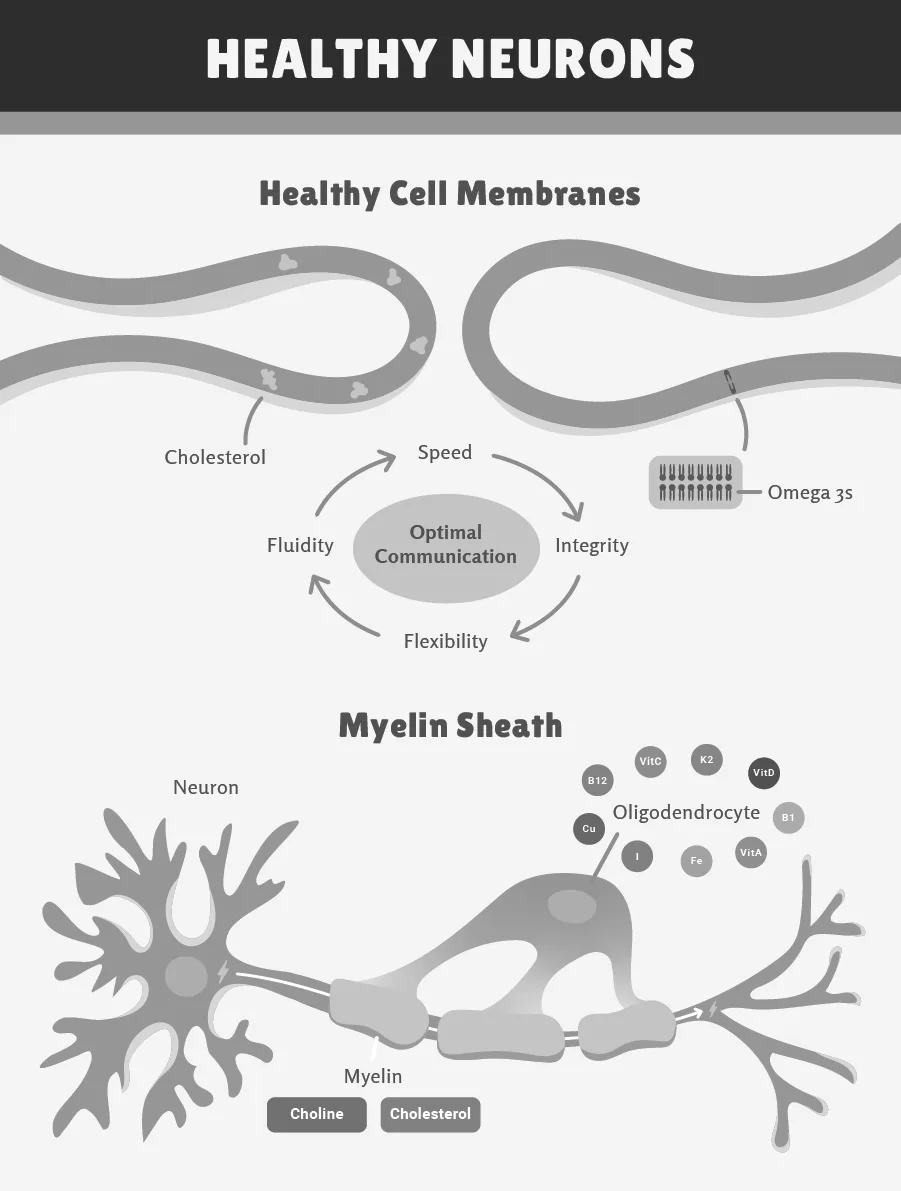
- The four key characteristics of healthy and functional neurons: speed, integrity, flexibility, fluidity.
- Cholesterol is an essential part of neuronal membranes. It supports communication by keeping the membrane intact and durable, yet fluid and responsive.
- Omega-3 fatty acids are also embedded in the neuronal membranes, and they provide flexibility, which aids plasticity in the brain.
- Oligodendrocytes are cells that are responsible for building myelin on neuronal axons.
- Oligodendrocytes utilize a number of vitamins, minerals, and other nutrients to lay down healthy and functional myelin.
Plasticity offers us the potential to improve our mental wellness. With active and adaptive plasticity, things start to come together. What was once confusing, bewildering, and seemingly out of our control, suddenly begins to make a lot more sense with the help of plasticity. After the original neuronal connections break apart, shift, and make new connection, we can now see what is actually happening, in the moment. We are more in touch with reality, less attached to our initial perceptions that were skewed by negative emotionality. Plasticity connects the dots between our experiences and our reactions to those experiences. This reorganization of connections between neurons allows us to better understand why we are feeling whatever it is we are feeling in that moment. Plasticity gets to work and we see things for what they are. This consolidation of experiences and emotions can lead not only to greater coping skills, but also wisdom.163
If you think about it, wisdom is often the antidote to mental illness symptoms. Wisdom is what we search for when we peruse the self-help aisle of the bookstore. Wisdom is what we’re seeking when we see a therapist or consult a pastor. Wisdom gets us through really challenging times with poise and grace. It teaches us when to act and when hold back. We need wisdom in our lives.
Sometimes in life we need to stand up and say “nope, that’s not gonna work for me.” Boundaries are necessary. Conversely, sometimes one of the best skills in life is knowing when to let another person or a situation cool off. Instead of arguing, sometimes the best thing to do is to take a step back. When a cup of piping hot coffee tips over, wisdom is that instinct that tells us to resist the urge to put our hand out there and save it from falling. Wisdom instructs us to just let it happen. In life we need to get burned a few times before we realize it’s better to just back up versus trying to lunge towards problems in an effort to save or control and fix.
Wisdom also turns problems into opportunities. It does so, in part, by decoupling our deeply irrational feelings from our unbiased observations of reality. With that irrationality safely separated from our thoughts and feelings, wisdom helps us choose a different path. It helps us see what we’re going through from a different angle, one that is full of opportunity and meaning.
Go With The Flow
Let’s review. Our brain has needs. Neurons need to maintain an intact and functional structure in order to achieve optimal communication. We need signal speed and integrity to keep the messages flowing. Connecting the dots between our experiences and our responses to them keeps us safe from irrationality. For this, our neurons need flexibility. In terms of optimal communication, we need speed, integrity, and flexibility. But, we one more element: fluidity.
Fluidity means that the outer cell membranes of neurons can bend, twist, and adapt the local environment.
The brain needs the neuronal cell membranes to be fluid in order to respond to ever-changing circumstances that life throws our way.164–167
Fluidity allows protein transporters and receptors to embed inside the neuronal membranes. Protein transporters allow neurotransmitters, peptides, hormones, and other substances to enter the neuron, which aids in the daily business of neuronal communication. Receptors are the ears of the neurons and they hear what messages the body and brain are trying to send. Fluidity is critically important function as well.
Speed, integrity, flexibility, and fluidity all keep our neurons healthy and communicating optimally. These four characteristics support the behind the scenes work that allows important messages to travel unimpeded within the brain. Good communication within and across the brain is exactly what we need to become flexible, balanced, and sharp in our daily lives.
Cell Membrane Nutrients
| Vitamin | Function | Food Sources |
|---|---|---|
| Vitamin A | Supports oligodendrocytes in creating myelin | liver, sweet potatoes, carrots, cantaloupe, red peppers, mangoes, black-eyed peas, apricots, cheese, eggs, salmon |
| Vitamin D | Supports oligodendrocytes in creating myelin | salmon, swordfish, trout, mackerel, herring, mushrooms, cheese, milk |
| Vitamin K2 | Supports oligodendrocytes in creating myelin | ghee, cheese (pastured/grass-fed), eggs (yolks), pork, oysters, dark chicken, liver |
| Vitamin B1 | Supports oligodendrocytes in creating myelin | tomatoes, edamame, peas, kidney beans, pinto beans, acorn squash, sunflower seeds, tahini, potatoes, milk, peppers, onions, garlic, asparagus, broccoli raab |
| Vitamin B12 | Supports oligodendrocytes in creating myelin | clams, octopus, oysters, mackerel, salmon, fish roe, crab, tuna, eggs, cod |
| Vitamin C | Supports oligodendrocytes in creating myelin | kale, kiwi, oranges, watercress, broccoli, lemon juice, grapefruit, mango, garlic, spinach |
| Mineral | Function | Food Sources |
|---|---|---|
| Iodine | Supports oligodendrocytes in creating myelin | seaweed, cod, yogurt, milk, shrimp, eggs, tuna, prunes, cheese, lima beans *Iodized Salt = ¼ tsp = 71mcg *Nori Sheets = 1 gram = 15-40mcg |
| Iron | Supports oligodendrocytes in creating myelin | (Heme) clams, oysters, mussels, beef, turkey, chicken (Non-Heme) lentils, chickpeas, black-eyed peas, kidney beans, white beans, black beans, potatoes with skin, raisins, apricots, cashews, almonds, pistachios, tahini, spirulina |
| Copper | Supports oligodendrocytes in creating myelin | oysters, sunflower seeds, dark chocolate, almonds, apricots, crab, octopus, lobster, tuna |
| Nutrient | Function | Food Sources |
|---|---|---|
| Choline | Raw material for myelin creation | shiitake mushrooms, radish, sundried tomatoes, spirulina, cauliflower, potatoes, shallots, egg (yolks), milk, fish roe, shrimp, salmon, scallops, clams, cod, flaxseeds, pistachios, pumpkin seeds, cashews, sunflower seeds, pine nuts, almonds |
| Cholesterol | Raw material for myelin creation | eggs, liver, squid, chicken, oyster, lobster, crab, fish, pork, lamb, butter, beef, milk, cheese, yogurt |
| Omega 3’s (DHA) | Raw material for cell membranes of neurons | fish roe, mackerel, salmon, swordfish, oyster, tuna, sardines |
Sources cited in this chapter
Numbers match the superscripts above and the book's full reference list.
- 159.D, L., P, S., Davis, L., Richardson, S. (2015). Fundamentals of Neurologic Disease Find it: reference 159 on Google Scholar
- 160.Kidd, G., & Trapp, B. (2010). Molecular organization of the oligodendrocyte and myelin. In P.Armati & E. Mathey (Eds.), The Biology of Oligodendrocytes (pp. 64- 102). Cambridge: Cambridge University Press. Find it: reference 160 on Google Scholar
- 161.Saher, G., Quintes, S., Nave, K. (2011). Cholesterol: A Novel Regulatory Role in Myelin Formation The Neuroscientist 17(1), 79-93. Find it: reference 161 on Google Scholar
- 162.Ho, V., Lee, J., Martin, K. (2011). The Cell Biology of Synaptic Plasticity Science 334(6056), 623-628. Find it: reference 162 on Google Scholar
- 163.Olson, D. (2018). Psychoplastogens: A Promising Class of Plasticity-Promoting Neurotherapeutics Journal of Experimental Neuroscience 12(), 1179069518800508. Find it: reference 163 on Google Scholar
- 164.Valentine, R., Valentine, D. (2004). Omega-3 fatty acids in cellular membranes: a unified concept Progress in Lipid Research 43(5), 383-402. Find it: reference 164 on Google Scholar
- 165.Glomset, J. (2006). Role of Docosahexaenoic Acid in Neuronal Plasma Membranes Sci. STKE 2006(321), pe6-pe6. Find it: reference 165 on Google Scholar
- 166.Kidd, P. (2007). Omega-3 DHA and EPA for cognition, behavior, and mood: clinical findings and structural-functional synergies with cell membrane phospholipids. Alternative medicine review : a journal of clinical therapeutic 12(3), 207-27. Find it: reference 166 on Google Scholar
- 167.Tanaka, K., Farooqui, A., Siddiqi, N., Alhomida, A., Ong, W. (2012). fects of Docosahexaenoic Acid on Neurotransmission Biomolecules & Therapeutics 20(2), 152-157. Find it: reference 167 on Google Scholar
From The Mental Wellness Diet: Ancient Wisdom - Evolving Science - Modern Day Options © 2020 Justin Bethoney NP IPN, Inc.. Published for educational and informational purposes only; it is not a diagnosis, treatment or substitute for professional healthcare. Talk with your own clinician about your health.