
Service
Integrative Psychiatry
- Telehealth by Zoom
- Ages 5 and up
- Licensed in OR, WA, ME, FL
In short
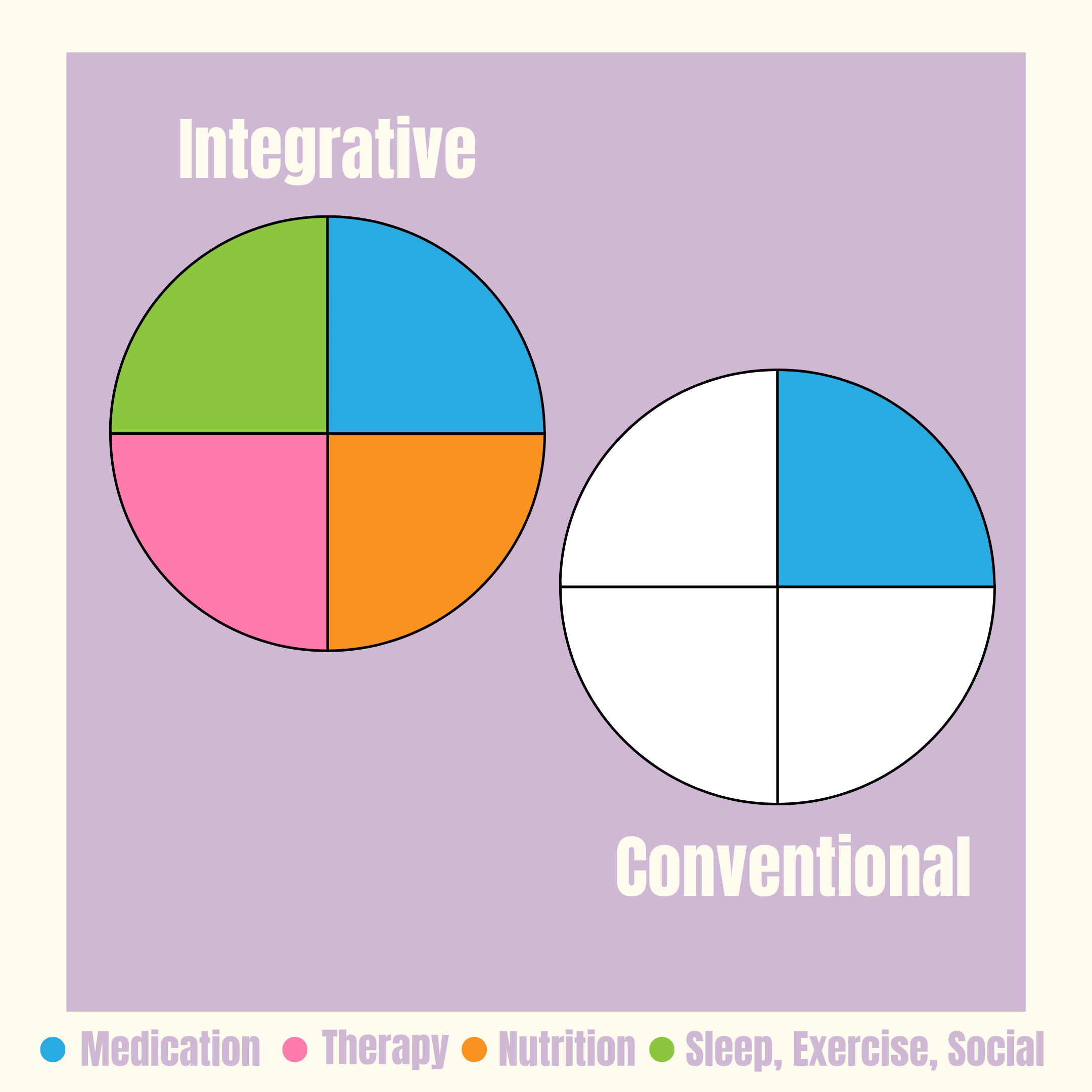
Integrative psychiatry, as Justin Bethoney practices it, is whole-person psychiatric care: longer visits that cover medication options and therapy, plus an assessment of sleep, diet, exercise, stress and physical imbalances such as nutrient deficiencies, chronic inflammation and gut health. Addressing those alongside, or instead of, medication tends to help patients do better than medication alone.
- 01
Time for the whole story
Most patients use the full hour, so there's room for questions about medication and for your history.
- 02
Labs that look deeper
Iron and ferritin, vitamin D, B12 and folate, thyroid and hs-CRP, usually ordered through your primary care provider.
- 03
Special tests only if useful
Genetic, omega-3, microbiome or food-sensitivity testing only when clearly helpful and you choose to pay for it.
It's not "woo woo"
"Integrative" is a trendy word, but there are no red lights, hyperbaric chambers or sound bowls here. Most of it is basic, common-sense work that takes real participation: sleep, diet, exercise, stress management and a few well-chosen supplements.
In practice it means taking care of the body, looking for imbalances in physiology, improving self-care habits, and therapy about the here-and-now issues that are likely driving anxiety, depression, insomnia or scattered thinking.
What gets assessed
Beyond your symptoms and history, Justin looks at the physical contributors that conventional visits rarely have time for:
- Sleep, diet, exercise and stress
- Physical symptoms that may be feeding mental health symptoms
- Nutrient deficiencies and blood sugar swings
- Chronic inflammation and gut health
- Genetic factors and environmental exposures
Lab work
Common baseline bloodwork includes a CBC, CMP, thyroid panel, lipid panel, iron panel and ferritin, vitamin D, B12 and folate, and hs-CRP. Justin can write the order for Quest or a local hospital, but he often asks your primary care provider to order it so insurance covers it.
Specialty tests (genetic testing, omega-3 index, stool/microbiome, adrenal or food-sensitivity testing) are used only when clearly useful and when you choose to pay out of pocket, through Rupa Health (now part of Fullscript). Pharmacogenomic testing (Genomind or Tempus, about $300) is used rarely, because in Justin's experience its usefulness is limited.
Why more time matters
Most patients use the full hour. That leaves room for real questions and answers about medication, and for hearing your whole story, which is where the most useful clues usually are.
From Justin's book, free to read
Go deeper in The Mental Wellness Diet
Common questions
Does integrative psychiatry still use medication?
Do you sell supplements?


Ready to get to the root of it?
Complete the short screening form or leave a voicemail. Calls are returned within 24 hours on weekdays.
In crisis? Call or text 988, call 911, or go to the nearest emergency room.