Integrative vs Conventional Psychiatry: Key Differences
When seeking help, it is worthwhile to consider two options: an integrative psychiatric provider vs a conventional one. Below you will find answers to key questions about the differences and what those differences mean for patients receiving care.
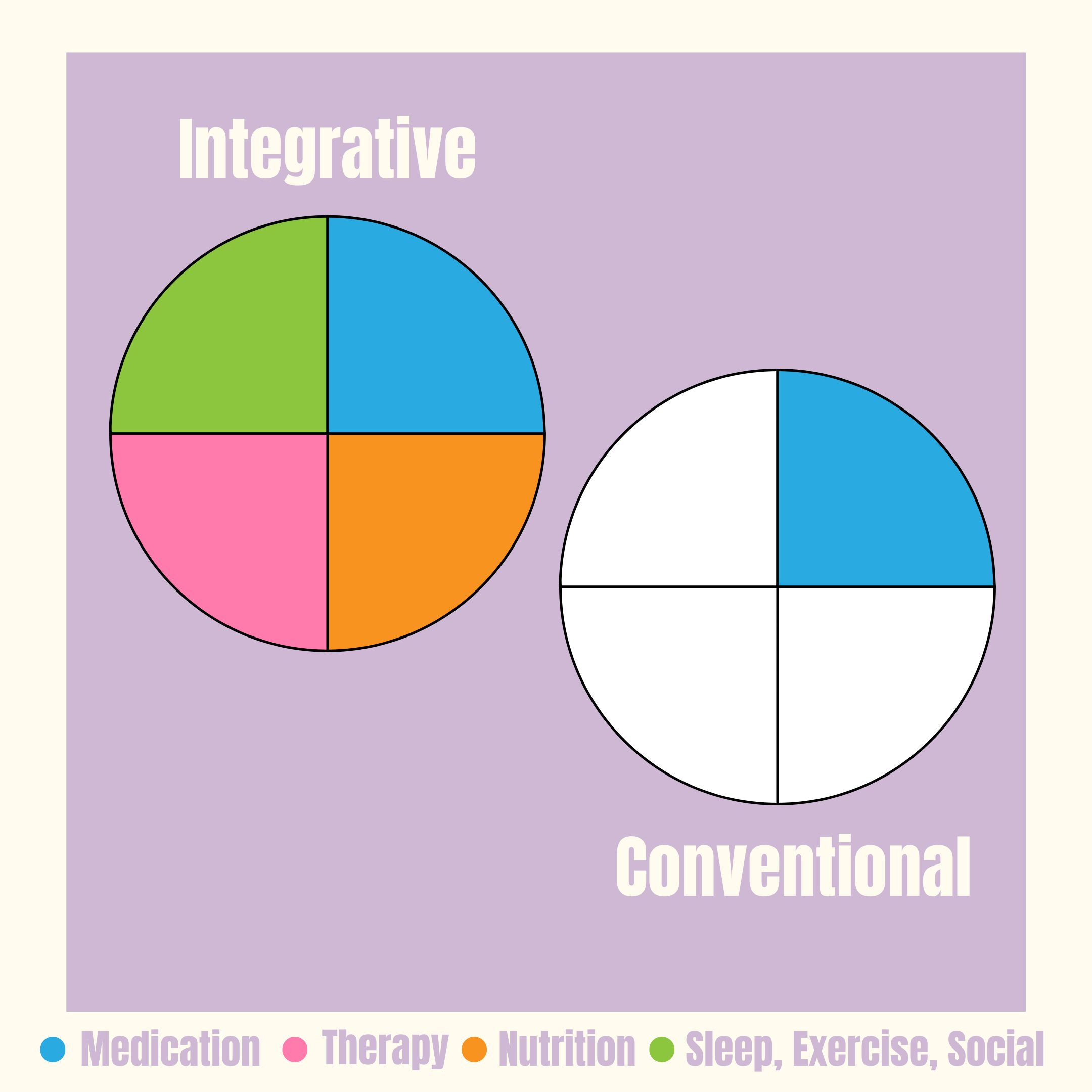
Many people assume psychiatric care is basically the same wherever you go: a prescription, maybe a referral for therapy, maybe a medication switch when the first one stops working. That's one version of psychiatric care, and for a lot of people, it's the only version they've ever seen.
There's another approach, and the differences are worth understanding before you choose a provider or remain with an approach that hasn't moved the needle. Conventional psychiatry follows a biomedical framework: identify a diagnosis, match it to an evidence-based medication or therapy protocol, observe, and if symptoms persist, add additional medications or treatments. In healthcare, this is known as polypharmacy, which tends to worsen patients' health and functioning.
The integrative approach starts with the same diagnosis but asks a different question: what are the root causes of the illness/symptoms presenting at this time? Similarly, a parallel inquiry is also important: what needs to be in place in this individual’s life that isn’t and, in turn, is permitting, or even promoting, illness/symptoms? Often the answer includes some combination of the common areas of focus in integrative psychiatric treatment, such as focus on diet, sleep, exercise, stress management, and even social supports and community.
The integrative approach begins with a different conversation and, in the end, leads to different outcomes. However, the integrative approach does require significantly more time, effort, participation, behavior change at home, and money spent on health in some instances.
This article walks through both models side by side, including where each excels, where each falls short, what the evidence actually says, and how to decide which approach fits your situation.
Integrative vs Conventional Psychiatry: The Experiential Divide
Conventional, or biomedical, psychiatry treats mental illness as a brain-based disorder shaped by neurotransmitter function, genetic risk, and psychiatric history. The core intervention is medication matched to a diagnosis, with psychotherapy outsourced to another provider, typically a local therapist.
This model is efficient, well-researched, and confident. It excels in stabilizing severe or urgent symptoms during a crisis. One potential downside here is leaving an appointment feeling like symptoms are being managed rather than understood. Similar to going to the ER for a broken bone, conventional psychiatric care is the go-to when things are suddenly severe and need to be managed effectively and quickly.
Integrative mental health starts with the same clinical picture but widens the investigation. A diagnosis like depression doesn’t immediately or solely lead to a prescription from the industry-accepted medication algorithm. Factors like blood sugar regulation, nutrient deficiencies, hormonal shifts, sleep disruption, exercise and movement patterns, social situations, and stressors are all examined as possible contributors to psychiatric symptoms. The goal is to address as many underlying drivers as possible.
In turn, if and when the provider and patient choose medication, it is likely to be effective, and more effective at lower doses with less or no side effects. That root-cause orientation is the defining difference between the two approaches, and it shapes every other aspect of how care is delivered.
With the integrative approach, the first step is asking a bunch of questions about a patient’s history, current stressors, and mindset. Next, the task is to harvest all of this important data and then reconstruct the story of how the patient fell into illness and dysfunction. From there, a common sense plan is crafted to help the patient return to health and improved functioning.
That’s the experiential difference between integrative and conventional treatment.
Treatment Tools: Integrative vs Conventional Psychiatry Compared
Medication
Conventional psychiatry's primary tools are psychotropic medications and evidence-based psychotherapy, most commonly CBT. Again, it is important to note that commonly a prescribing provider does not offer psychotherapy in addition to medication. This used to be the case three generations ago, but this disappeared across the industry with the influence of insurance-managed healthcare.
Also, in conventional psychiatry, lab work is used to rule out medical illnesses that could be causing symptoms. However, more commonly, blood work is obtained to assess medication side effects or to test medication levels in patients’ systems, which then guides dosing.
Further, conventional psychiatry sessions are typically structured around symptom tracking, medication adjustments, and safety monitoring. A skilled conventional psychiatric provider can stabilize serious mental illness swiftly and reliably. This can be enormously helpful when someone is in crisis.
Lab Work
Integrative psychiatric care extends the toolkit to include deeper assessments of basic bloodwork, as well as specialty functional medicine lab testing. The integrative approach assesses for nutrient status, thyroid markers, inflammatory indicators, presence of toxins or impaired detoxification pathways, and the organ reserve needed to cope with modern-day life. Addressing the root causes discovered in blood work can clear up problems that many patients don’t know they have. Common examples here include iron or other nutrient deficiencies, blood glucose ups and downs, inflammatory processes running silently in the background, and hormonal shifts that gradually seep into a person’s daily life.
Therapy, Nutrition, & Lifestyle Interventions
Integrative psychiatry also incorporates planning around diet/nutrition, sleep, exercise/movement, and stress management practices. Research exists that demonstrates the meaningful impact of these nutrition and lifestyle interventions for depression, anxiety, ADHD, and other mental illness symptoms. Integrative psychiatry approaches like these don't discard conventional tools; they build on them. These tools aren't replacements for proven treatments, like the commonly prescribed psychiatric medications. With an integrative approach, conventional perspectives and tools are not dismissed; they are just part of the larger toolkit.
How Sessions and the Provider Relationship Actually Differ
A standard psychiatric appointment in a high-volume practice tends to run 15 minutes (some offer 30 minutes) for medication management. Under the constraint of limited time, a conventional provider may ask the patient to boil it down for them: better, worse, or the same? The focus narrows down to symptoms, medication adherence and tolerability, and safety concerns. Again, psychotherapy usually happens separately with a different provider. This split-care model means the prescriber and therapist have to make time in their busy schedules to connect, which in reality happens infrequently, if at all. Naturally then, the patient is often left coordinating their own care between two or more clinicians. For some, the conventional model is sufficient and even easier in many ways. Yet, for those seeking more support from one provider, the integrative approach is likely a better fit.
To accomplish all of what has been listed above in an integrative approach, visits are longer, and communication between appointments is more involved.
This is why Justin Bethoney NP Integrative Psychiatry, offers the old-school hour-long follow-up visits (initial evaluations are 1.5-2 hours long).
Potential downsides of longer appointments include difficulty carving out time from a busy life/schedule, possible fatigue from talking about problems and pain points for extended periods, and information overload for the provider and patient. To circumvent these challenges, Justin Bethoney, NP, offers patients a written treatment plan accessible in the secure message portal. Having the collection of factors mapped out in a written form often helps patients avoid overwhelm and the duo to steer clear of analysis paralysis when making treatment decisions.
What Each Approach Does Well and Where It Falls Short
Limitations of Conventional Psychiatry
Despite the limitations discussed above, conventional psychiatry possesses a strong evidence base for effectively addressing acute psychiatric conditions, providing crisis stabilization, and lessening the severity of mental illness in relatively short periods of time. The conventional psychiatry approach is tried and true. The average or common outcomes are known, treatment and providers are relatively easy to access in most areas, and the pharmaceuticals/medications themselves are manufactured with high-quality standards. For most patients, it’s the most accessible and insurance-friendly model.
Where the conventional approach falters is in the time and attention available (or offered) to patients. For those individuals who have only partially responded to medications, whose symptoms persist, or who want to understand more about why they're struggling, the 15-minute medication check is underwhelming at best. This is mostly due to the way that healthcare is structured. It does not simply represent failures or shortcomings of the specific provider; it reflects what the insurance reimbursement model supports.
Limitations of Integrative Psychiatry
The evidence base for integrative mental health is genuinely mixed, and that's worth acknowledging. In most cases, dietary supplements are not as strong or impactful as medication, which makes sense. For the exceptions to this rule, see relevant blog articles at Justin Bethoney NP Integrative Psychiatry.
Anecdotal evidence on the impact of various dietary supplements or other integrative interventions reigns supreme online and on social media. These options should be considered with caution and some skepticism. An important principle here is the value of matching an individual's severity with the spectrum of interventions. For those who are suffering but retaining good functioning, the least-harm integrative options are likely to be a good fit. For those experiencing severe symptoms and functional impairment, the stronger conventional pharmaceutical options are likely a better starting point.
This is important for both the patient and the potential new provider to consider before and during treatment. In some cases, conventional treatments will be vital for improving symptoms and ensuring safety.
Moreover, each individual should gauge how much time, money, and energy they can muster to put towards treatment. Often, time can be hard to find; talking about the tough stuff isn’t easy; change is hard; and supplements aren’t cheap. If the conventional psychiatry approach is more doable for a person at a point in time, starting there is the right fit.
Costs, Insurance, and What You'll Actually Pay
Conventional psychiatry is far more likely to be covered by insurance. Patients typically pay copays or coinsurance rather than the full visit fee, as long as the provider is “in-network.” Further, insurance generally covers medication management, standard psychotherapy, and routine diagnostic labs.
Justin Bethoney NP Integrative Psychiatry accepts popular commercial insurance in Oregon. Cash pay is also available.
For the initial evaluation and hour-long follow-up visits with Justin, billing includes an insurance procedure code for medication management and a code for psychotherapy added to the medication visit. For those patients who are not taking medication (or in need of a visit to discuss medications specifically), billing to insurance includes just one procedure code for an hour of psychotherapy.
Flexibility in treatment planning and insurance usage helps Justin provide those who are ready and motivated to take advantage of the integrative approach while using their insurance.
How to Decide Which Approach Fits Your Situation
Integrative psychiatric care tends to resonate with people who've been on medication for years without reaching full remission, who suspect there are biological or lifestyle factors contributing to their symptoms that haven't been investigated, or who have not felt fully understood by their conventional provider. Also, those new to the process intuitively value the integrative approach.
Individuals with anxiety, depression, or ADHD who already pay attention to diet, sleep, and lifestyle as health tools often find that integrative care is a natural fit. For those who know what they need to change but want education, encouragement, and space to explain themselves fully, the integrative approach offers that kind of collaboration and support.
Taking the First Step
Choosing between integrative vs conventional psychiatry isn't a question of which model wins. Both have genuine strengths. Both have real limitations. The right fit depends on the severity or urgency of your symptoms at this time, what you've already tried, what has already worked or failed to work, your current resources of time and money, and your capacity or bandwidth to participate in therapy and change.
The most important move is finding a provider who is honest and straightforward about the kind of care they provide. Begin by looking into the details of the practice, including typical appointment durations, areas of expertise, and options for therapy with or without medications.
If you want to explore what an integrative approach might look like for your specific situation, Justin Bethoney NP Integrative Psychiatry offers care in Florida, Oregon, and Washington state.