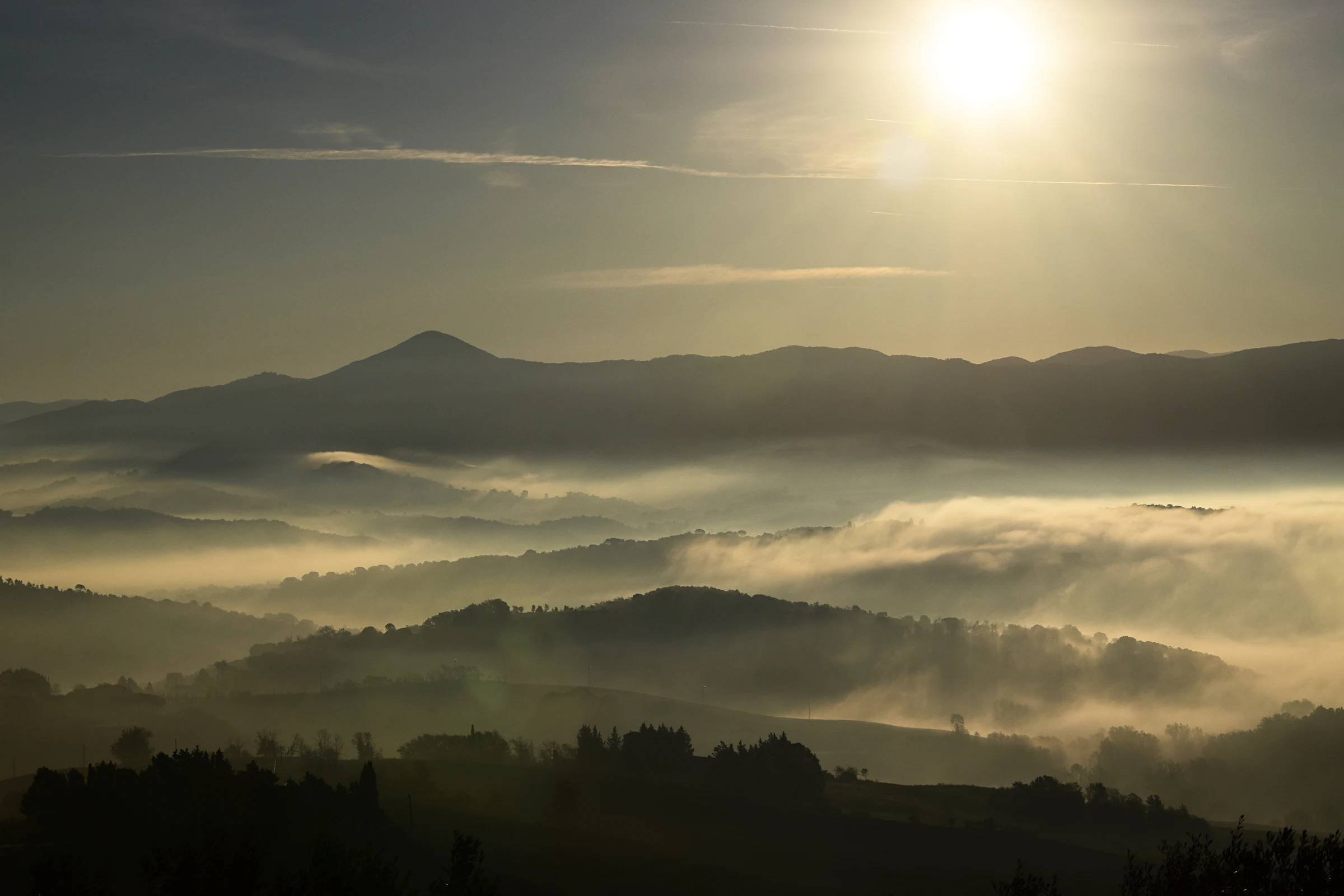
You’re likely aware that sunlight is the catalyst for Vitamin D production in our bodies. Specifically, UVB radiation from the sun activates the precursor of Vitamin D through our skin. It converts this precursor into usable Vitamin D in our body.33 Vitamin D then goes on to regulate our immune system,34–36 support the growth and repair of neurons,37–38 and assist in the production of neurotransmitters in our brains – including serotonin.39–40 Seeing that 80% of our Vitamin D stores come from sun exposure, sunlight is Vitamin D’s wingman.41
Outside of the effects on Vitamin D, sunlight sends some important signals to the body and brain. Exposure to the sun’s rays triggers the release of nitric oxide, which then supports the heart, lungs, and blood vessels.42 That’s also really helpful for our mental wellness, as adequate oxygenation is critical for brain function.
In addition, sunlight is a powerful regulator of our daily rhythms. These rhythms follow the sun’s path through the day.43–44 Our circadian rhythm is an internal biological clock that orchestrates all the chemical activity swishing around in our brain and body throughout the day. The sun is the reason why we are up and alert during the day, and become tired and sleepy at night.
Our circadian rhythm takes its cues from the various wavelengths of sunlight that beam down on us throughout the day. Bright, blue-wavelength light during the midday triggers us to to move our bodies and release energy. The red hue of sunset preferentially converts serotonin to melatonin to help orchestrate the onset of sleep.45 The absence of sunlight, or in other words darkness, allows our bodies to fall deeper into sleep and engage in restorative processes.46
Most important in all this is the morning sunlight exposure. That early morning light exposure anchors our circadian rhythm. Every day, morning light from the sun resets our clock, helping us to naturally stay awake and moving during the day and asleep and still at night. Greater light exposure during the morning and midday preps us to respond better to darkness as a cue for falling asleep.47 Following a daily activity pattern that is aligned with the sun’s rise, peak, and setting is really important to many biological rhythms inside your body and brain.
Sources cited in this section
Numbers match the superscripts above and the book's full reference list.
- 33.Wacker, M., Holick, M. (2013). Sunlight and Vitamin D Dermato-Endocrinology 5(1), 51 - 108. Find it: reference 33 on Google Scholar
- 34.Baeke, F., Takiishi, T., Korf, H., Gysemans, C., Mathieu, C. (2010). Vitamin D: modulator of the immune system Current Opinion in Pharmacology 10(4), 482 - 496. Find it: reference 34 on Google Scholar
- 35.Aranow, C. (2011). Vitamin D and the Immune System Journal of Investigative Medicine 59(6), 881 - 886. Find it: reference 35 on Google Scholar
- 36.Fisher, S., Rahimzadeh, M., Brierley, C., Gration, B., Doree, C., Kimber, C., Cajide, A., Lamikanra, A., Roberts, D. (2019). The role of vitamin D in increasing circulating T regulatory cell numbers and modulating T regulatory cell phenotypes in patients with inflammatory disease or in healthy volunteers: A systematic review. PloS one 14(9). Find it: reference 36 on Google Scholar
- 37.Cui, X., Gooch, H., Petty, A., McGrath, J., Eyles, D. (2017). Vitamin D and the brain: Genomic and non-genomic actions. Molecular and Cellular Endocrinology 453(), 131 - 143. Find it: reference 37 on Google Scholar
- 38.Kiraly, S., Kiraly, M., Hawe, R., Makhani, N. (2006). Vitamin D as a Neuroactive Substance: Review The Scientific World Journal 6(), 125 - 139. Find it: reference 38 on Google Scholar
- 39.Patrick, R., Ames, B. (2014). Vitamin D hormone regulates serotonin synthesis. Part 1: relevance for autism. FASEB journal : official publication of the Federation of American Societies for Experimental Biology 28(6), 2398 - 2413. Find it: reference 39 on Google Scholar
- 40.Kaneko, I., Sabir, M., Dussik, C., Whitfield, G., Karrys, A., Hsieh, J., Haussler, M., Meyer, M., Pike, J., Jurutka, P. (2015). 1, 25-Dihydroxyvitamin D regulates expression of the tryptophan hydroxylase 2 and leptin genes: implication for behavioral influences of vitamin D. FASEB journal : official publication of the Federation of American Societies for Experimental Biology 29(9), 4023 - 4035. Find it: reference 40 on Google Scholar
- 41.Holick, M. (2002). Vitamin D: the underappreciated D-lightful hormone that is important for skeletal and cellular health Current Opinion in Endocrinology, Diabetes and Obesity 9(1), 87. Find it: reference 41 on Google Scholar
- 42.Fleury, N., Geldenhuys, S., Gorman, S. (2016). Sun Exposure and Its Effects on Human Health: Mechanisms through Which Sun Exposure Could Reduce the Risk of Developing Obesity and Cardiometabolic Dysfunction International journal of environmental research and public health 13(10), 999. Find it: reference 42 on Google Scholar
- 43.Hasegawa, Y., Arita, M. (2014). Circadian clocks optimally adapt to sunlight for reliable synchronization. Journal of the Royal Society, Interface 11(92), 20131018. Find it: reference 43 on Google Scholar
- 44.Remi, J. (2015). Humans Entrain to Sunlight - Impact of Social Jet Lag on Disease and Implications for Critical Illness. Current pharmaceutical design 21(24), 3431 - 3437. Find it: reference 44 on Google Scholar
- 45.Morita, T., Tokura, H. (1996). Effects of Lights of Different Color Temperature on the Nocturnal Changes in Core Temperature and Melatonin in Humans Applied Human Science 15(5), 243 - 246. Find it: reference 45 on Google Scholar
- 46.Duffy, J., Czeisler, C. (2009). Effect of Light on Human Circadian Physiology Sleep Medicine Clinics 4(2), 165 - 177. Find it: reference 46 on Google Scholar
- 47.Leproult, R., Colecchia, E., L’Hermite-Balériaux, M., Cauter, E. (2001). Transition from Dim to Bright Light in the Morning Induces an Immediate Elevation of Cortisol Levels The Journal of Clinical Endocrinology & Metabolism 86(1), 151 - 157. Find it: reference 47 on Google Scholar
From The Mental Wellness Diet: Ancient Wisdom - Evolving Science - Modern Day Options © 2020 Justin Bethoney NP IPN, Inc.. Published for educational and informational purposes only; it is not a diagnosis, treatment or substitute for professional healthcare. Talk with your own clinician about your health.